Speed & Smarts: Strategy First!
Apr 17, 2024
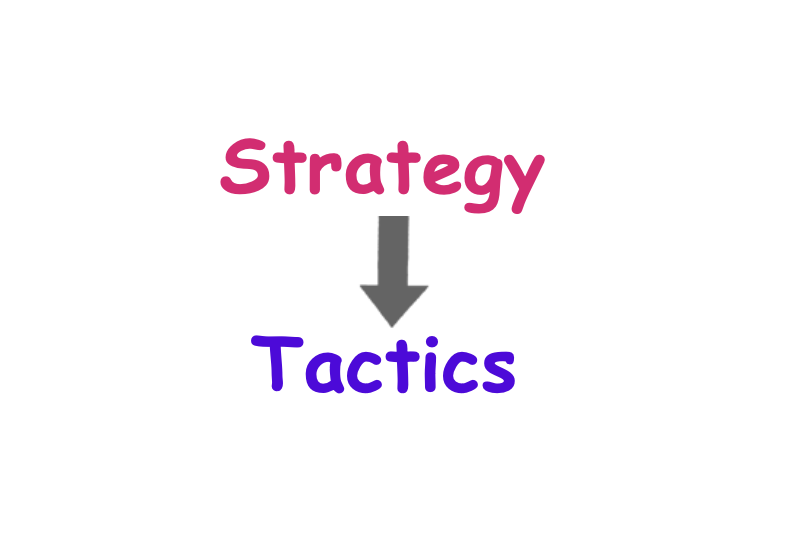
No matter where you are on the race course, strategy almost always comes before tactics. First you make a strategic plan for where you want to go (in the absence of other boats), and then you use tactical moves (if necessary) to help you implement your strategy in the midst of a fleet.
Assess your risk tolerance.
When you race sailboats, you have to make a lot of decisions. And each decision carries a certain amount of risk. For example, on a beat you have to decide whether to play the right side, the left side, or the middle. And if you go to one side, how far should you go? How much risk will you take? To help make these decisions, have a discussion with your team before the race or series about your tolerance for risk. Then use this discussion to guide your race course choices.
Sail the longer tack first.
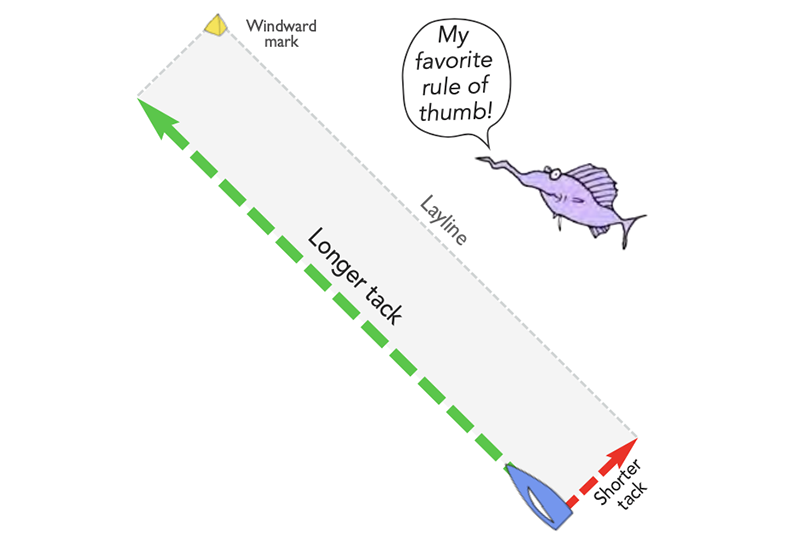
One way to avoid getting to a layline too early is by using this rule of thumb: Sail the tack on which your bow is pointing closer to the next mark. This is the tack that takes you toward the middle of the course. It’s especially helpful when:
1) You’re not sure what the wind will do;
2) One tack is a lot longer than the other; or
3) You are far from the mark.
Sailing toward the mark and the middle of the course gives you the best chance of success when conditions are likely to change before you get to the mark. This strategy is valuable for both beats and runs.
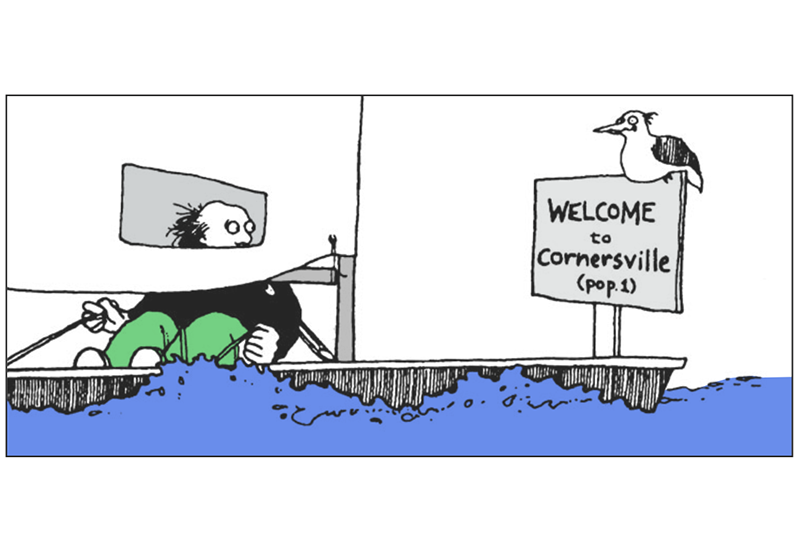
On beats and runs, the corners and laylines are usually bad places to be because: 1) you may overstand the mark and sail extra distance; 2) you will lose to other boats if you get a lift or a header; and 3) other boats may tack or jibe on you and give you bad air all the way to the mark (or make you do two extra tacks or jibes and overstand the mark). This is why it’s usually better to stay away from laylines, especially when you are relatively far from the windward or leeward mark.
Go up-current first.
When the current is not aligned with the wind, look for strategic opportunities. If the wind and current are steady, it won’t matter which tack you sail first. But when it’s likely that the conditions will change, a high-probability move is sailing the up-current tack first. The tack that takes you more into the current is also usually the longer tack. Sailing this up-current tack won’t by itself get you to the mark faster, but it will leave you in better position to handle future shifts.
Make a plan for the next leg.
Before you round a mark, put together a strategic plan for the ensuing leg. This is your plan for how to use wind shifts, puffs and current to sail that leg as quickly as possible. Your strategy can be as simple as left or right – you just need some guidance for how to begin sailing that leg.

Check out this new 4-part webinar series:
Dave’s Top 50 Tips!
Hi! Please join me for a detailed explanation of my very best race-winning tips from the past 25 years. We’ll go around the race course and analyze dozens of specific pointers (covering strategy, tactics, speed, rules, and boathandling) to help you improve your racing performance this summer.
This webinar begins Monday, May 6, at 8:00 pm US EDT time (GMT -4). Each session is 90+ minutes full of video, diagrams, animations, and quizzes. The content is geared to skippers and crews racing all kinds of boats; participant questions are welcome throughout.
Click HERE for info