
Sail Design: How sails are designed – from measurements to build ready project
May 8, 2025
By Keven Piper
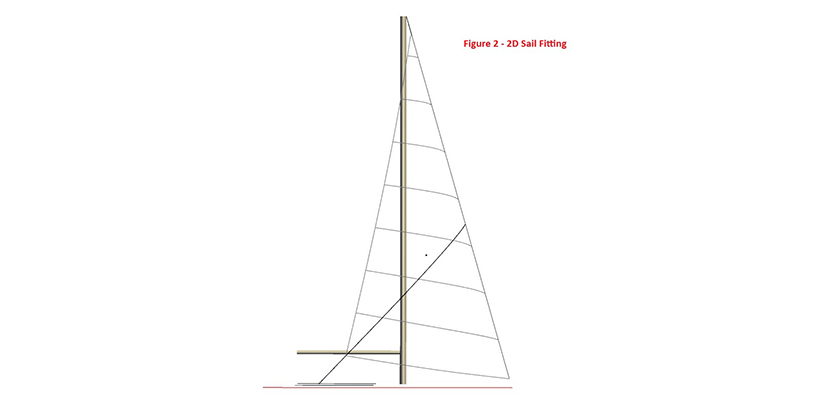
There are as many ways to design a sail as there are sail designers in the world. In the old days, sailmakers would start either with the measurements of an existing sail that worked on the boat or a blueprint of the sailplan of the boat. These 2D methods allowed the sailmaker to get a sail onto the rig, but would make assumptions about how the sail would sheet around stays or stanchions. Most experienced sailmakers could make allowances for the variance from the actual boat, and with more complicated rigs may need to adjust and recut the sail after fitting on the boat.
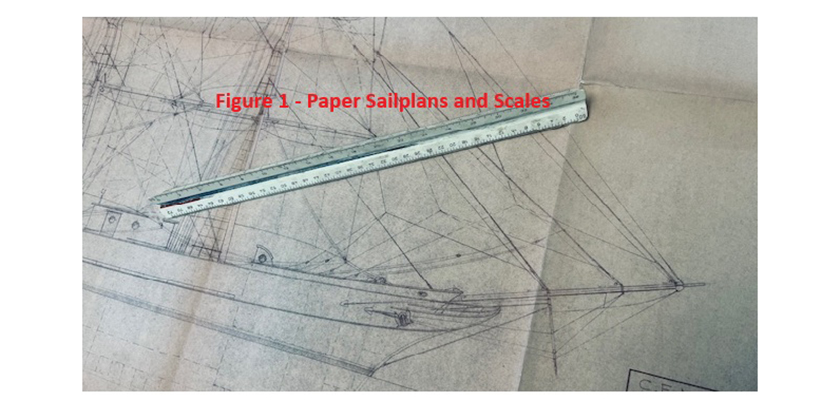
Most high volume sail lofts will still use a basic 2D representation to get a sail close enough using simple versions of design software.
For custom made sails today, the workflow is more about modelling the 3D sail on a 3D rig and hull. Sails are shaped with true 3d geometry, having both vertical and horizontal curvature as well as twist. We also need to account for the stay tension and mast bend. Knowing that most boats have spreaders and stays to sheet around, knowing their exact geometry is needed to fit the sail around those structures.

Once we have an accurate rig geometry model, we can input the modulus and longitudinal and lateral moments for the mast section. This allows accurate modelling of mast bend and resulting forestay tension. For non-current mast sections, this can also be modelled directly by measuring mast bend when measuring the boat, and making allowances for dynamic trimming modifications to the mast bend.
Figure 4 – Mast stiffness data from the mast maker thanks to Selden Mast

This is the first iteration of the mast bend and headstay sag simulation. This model will change as the design is refined in planform, sail shaping, and sailcloth choices. At this time, the designer looks for general sail fit issues since the sail is fitting the rig as if in sailing conditions. The image below shows the modelled mast bend, headstay sag at design wind range, and the now apparent interference with the top spreader when sheeted in using the existing track.
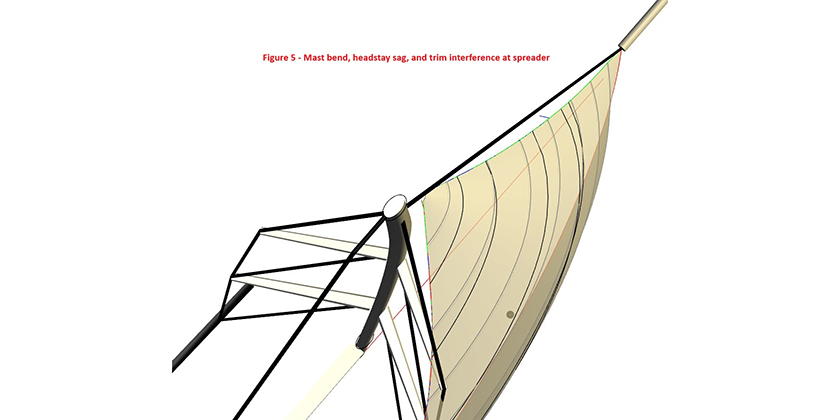
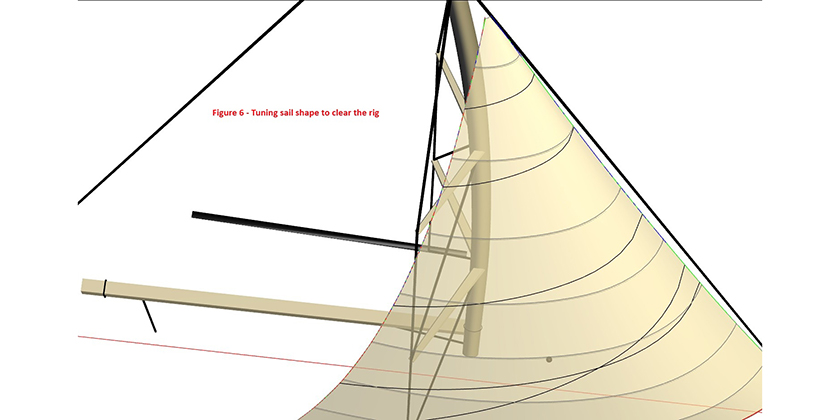
The original dimensions of the sail didn’t fit the boat very well. The high clew position had the sail trimming at the very aft end of the track. This high clew moved the girths up in the sail to make it too wide at the upper spreader to trim cleanly without interference or getting a slack leech. At this point the clew height is lowered, the twist, vertical camber profile, and leech hollow is modified to trim closely to the rig for upwind work.
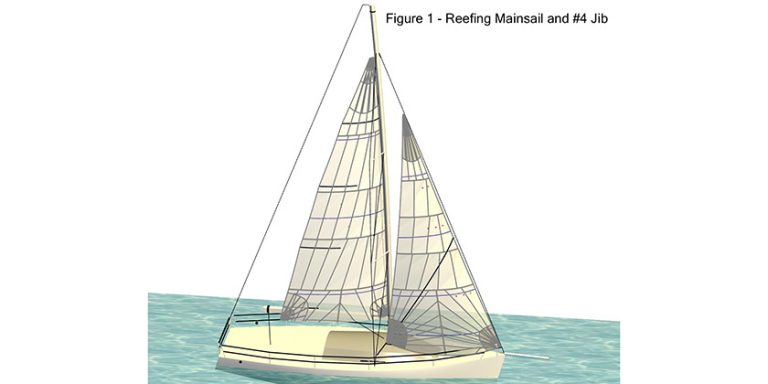
We have the sail project coming along nicely now with regards to fit. As this is a racing sail and we intend to do some aerodynamic and structural modelling; the hull, deck and stanchions need to be added to the project to get reasonably accurate aerodynamic modelling. The hull model can be imported from a provided digital model from the naval architect, or can be developed in an outside CAD system or the integrated hull and deck design system in the sail design software.

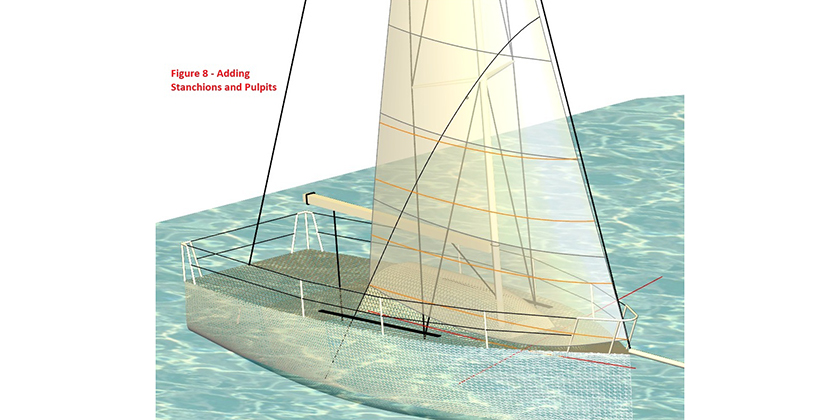
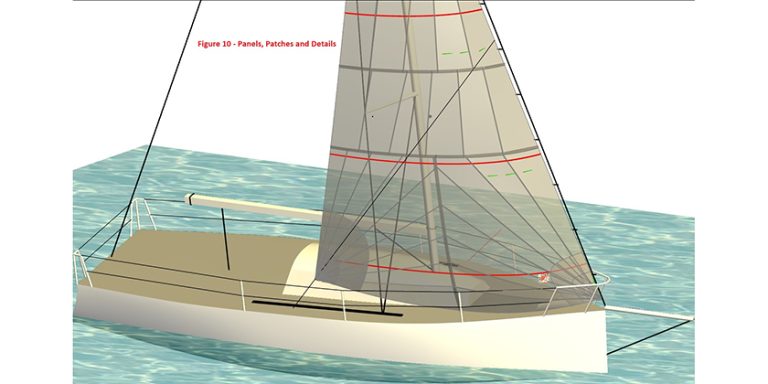
Now that we have the deck features modelled, we can see some interference from the bow pulpit and the forward lifelines. This requires some modification of the mould shape of the sail to trim with clearance of these immovable deck features. At this time the panel cuts are imported into the design to ensure that there are seams in locations to control the carefully shaped mould to trim cleanly. The sail is getting closer to a finished design, but details for production and structural reinforcements need to be included before structural modelling.
Next time, choosing cloth, finishing the design getting ready to cut panels.

Keven Piper, two-time Shark 24 World Champion, founded Hamilton, ON-based Bay Sails in 1998. Email: baysails@gmail.com